

Carotid Artery Disease Treatment

Carotid artery disease treatment focuses on reducing narrowing in the neck arteries and lowering the risk of stroke. The carotid arteries supply blood to the brain, and any blockage can affect brain function.
- A blocked artery in neck develops due to reduced blood flow
- It may remain silent in early stages
- It can increase the risk of stroke if untreated
Timely carotid artery disease treatment helps prevent complications and improves long-term outcomes
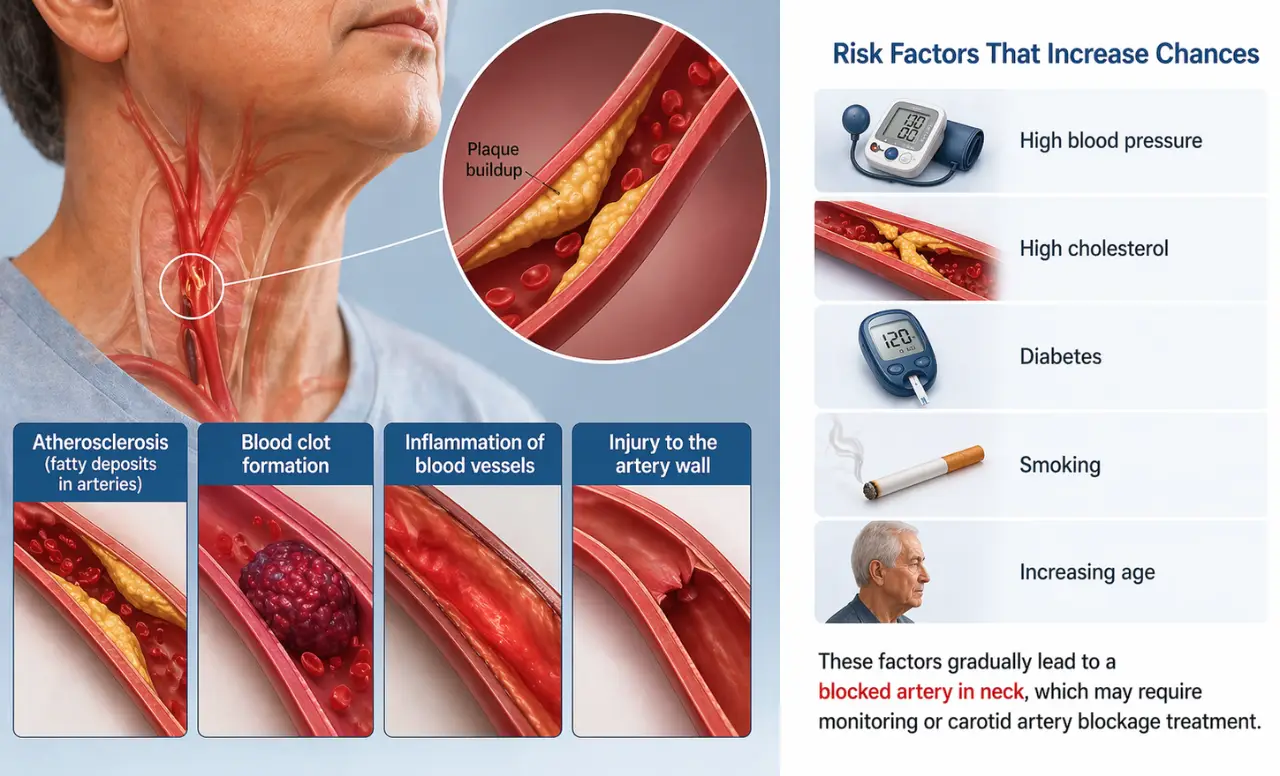
What Causes a Blocked Artery in the Neck?
The most common cause is atherosclerosis, where plaque builds up inside the arteries. However, other factors may also contribute.
Common causes include:
- Atherosclerosis (fatty deposits in arteries)
- Blood clot formation
- Inflammation of blood vessels
- Injury to the artery wall
Risk factors that increase chances:
- High blood pressure
- High cholesterol
- Diabetes
- Smoking
- Increasing age
These factors gradually lead to a blocked artery in neck, which may require monitoring or carotid artery blockage treatment.
Symptoms and signs of Carotid Artery Blockage
Carotid artery blockage often develops gradually and may not cause noticeable symptoms in its early stages. However, as the narrowing becomes significant or blood flow to the brain is affected, symptoms can appear.
Common symptoms of carotid artery blockage include:
- Sudden weakness or numbness on one side of the body
- Difficulty speaking or slurred speech
- Temporary loss of vision in one or both eyes
- Dizziness or loss of balance
These symptoms may occur suddenly and can be temporary, but they should not be ignored.
Clinical warning signs of carotid artery blockage may include:
- Sudden onset of neurological symptoms (mini-stroke or TIA)
- Episodes of confusion or difficulty understanding speech
- Brief loss of coordination or control of movement
These signs of carotid artery blockage indicate reduced blood flow to the brain and require immediate medical evaluation to prevent the risk of stroke.
How Carotid Artery Blockage is Diagnosed
Diagnosis focuses on identifying the severity of narrowing and assessing stroke risk.
Common tests include:
- Carotid Doppler ultrasound – first-line screening test
- CT angiography – detailed imaging of arteries
- Angiography – used in selected cases
These tests help guide the most appropriate carotid artery blockage treatment.
When Carotid Artery Disease Needs Treatment
Treatment depends on the severity of blockage and overall risk.
Carotid artery disease treatment is considered when:
- The artery narrowing becomes moderate to severe
- Symptoms are present
- Stroke risk is high based on evaluation
Early treatment helps prevent progression and reduces complications.
Carotid Artery Disease Treatment Approach
Treatment is planned stepwise based on patient condition.
1. Non-Surgical Treatment (Early Stage)
In early stages, neck blockage treatment can often be managed without procedures.
- Medications to control cholesterol and blood pressure
- Blood-thinning medicines
- Lifestyle changes (diet, exercise, smoking cessation)
This helps slow disease progression and reduce stroke risk.
2. Procedural Treatment (Advanced Cases)
When blockage is significant, procedures may be required.
- Carotid Endarterectomy
- Surgical removal of plaque
- Restores blood flow
- Carotid Angioplasty and Stenting
- Minimally invasive
- Keeps artery open using a stent
These are effective forms of carotid artery blockage treatment.
Risks and Complications of Carotid Artery Blockage
If left untreated, carotid artery disease can lead to serious complications.
Possible risks include:
- Stroke due to reduced blood flow
- Transient ischemic attack (temporary stroke-like symptoms)
- Complete blockage of the artery
Timely carotid artery disease treatment reduces these risks significantly.
How to Reduce the Risk of Carotid Artery Disease
Preventive care plays an important role in long-term health.
Key steps include:
- Controlling blood pressure and cholesterol
- Managing diabetes
- Avoiding smoking
- Maintaining a healthy diet and regular exercise
These measures help reduce the chances of developing a blocked artery in neck.
Consult a Vascular Specialist for Carotid Artery Disease
Carotid artery disease should be managed by a vascular surgeon or endovascular specialist.
Consultation is important in cases of:
- Sudden neurological symptoms
- Known carotid artery narrowing
- History of stroke or transient symptoms
- Presence of risk factors
Early consultation ensures timely carotid artery disease treatment and better outcomes.
Frequently asked questions
Yes, carotid artery disease can be serious because it reduces blood flow to the brain and increases the risk of stroke. Early diagnosis and proper carotid artery disease treatment help prevent complications and improve long-term health outcomes.
Many people live long lives with carotid artery disease if it is detected early and managed properly. Regular monitoring, lifestyle changes, and timely treatment help control the condition and reduce the risk of stroke.
Symptoms of carotid artery blockage may include sudden weakness on one side, speech difficulty, vision problems, dizziness, and loss of balance. These signs may appear suddenly and require immediate medical attention to prevent serious complications.
People with high blood pressure, diabetes, high cholesterol, smoking habits, obesity, and increasing age are at higher risk. These factors contribute to plaque buildup, leading to a blocked artery in neck and increasing stroke risk.
Foods high in saturated fats, trans fats, cholesterol, and processed sugars should be limited. Avoiding these helps reduce plaque buildup in the arteries and supports better vascular health, lowering the risk of carotid artery blockage.
The best carotid artery blockage treatment depends on severity. It may include medications, lifestyle changes, or procedures such as carotid endarterectomy or stenting to restore blood flow and reduce the risk of stroke.
A vascular surgeon is the specialist who treats carotid artery disease. They diagnose the condition, recommend appropriate carotid artery disease treatment, and perform procedures to improve blood flow and reduce stroke risk.
Early carotid artery disease can often be managed without surgery. Treatment includes medications to control cholesterol and blood pressure, blood thinners, and lifestyle changes such as diet, exercise, and quitting smoking to slow plaque buildup and reduce stroke risk.
Carotid artery blockage is usually checked using imaging tests such as carotid Doppler ultrasound, CT angiography, or angiography. These tests help assess blood flow, detect narrowing in the arteries, and guide further carotid artery blockage treatment if required.
If a carotid artery is blocked, blood flow to the brain can be reduced or stopped, increasing the risk of stroke. Without timely carotid artery disease treatment, this may lead to serious neurological complications or permanent brain damage.
Gallery
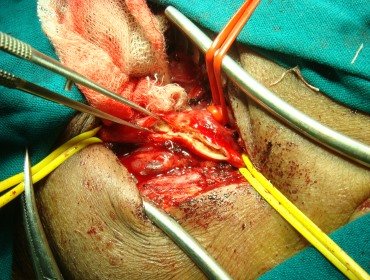
Carotid Endarterectomy
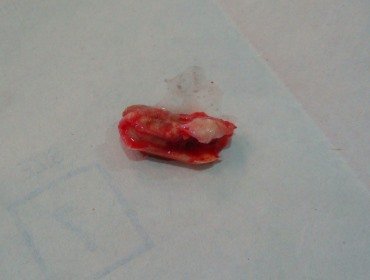
Excised Carotid Plaque

PTFE patch
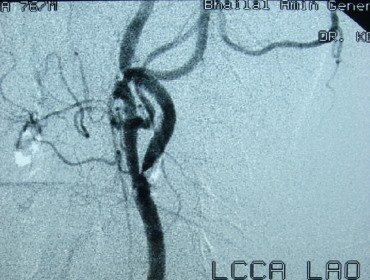
Angiography shows Cartoid Stenosis

Carotid Angioplasty Filter

Carotid body tumor