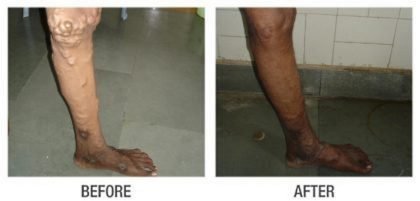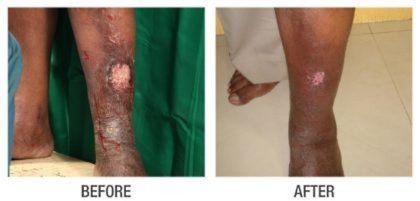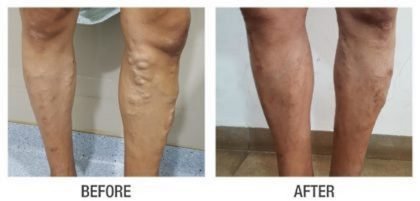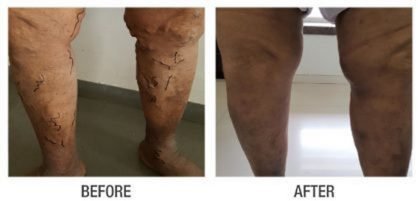

Spider/ Varicose Veins Treatment
Understanding Varicose Veins begins with knowing that these are enlarged, twisted, and damaged veins usually seen in the legs. They develop when vein valves become weak, allowing blood to collect instead of flowing properly back toward the heart.
- Most commonly affect the legs due to gravity and prolonged standing
- May appear blue, purple, bulging, or rope-like
- Can range from cosmetic concern to medical condition
- Often progress gradually if untreated
Early evaluation helps decide whether simple care, monitoring, or Varicose Veins Treatment is required.
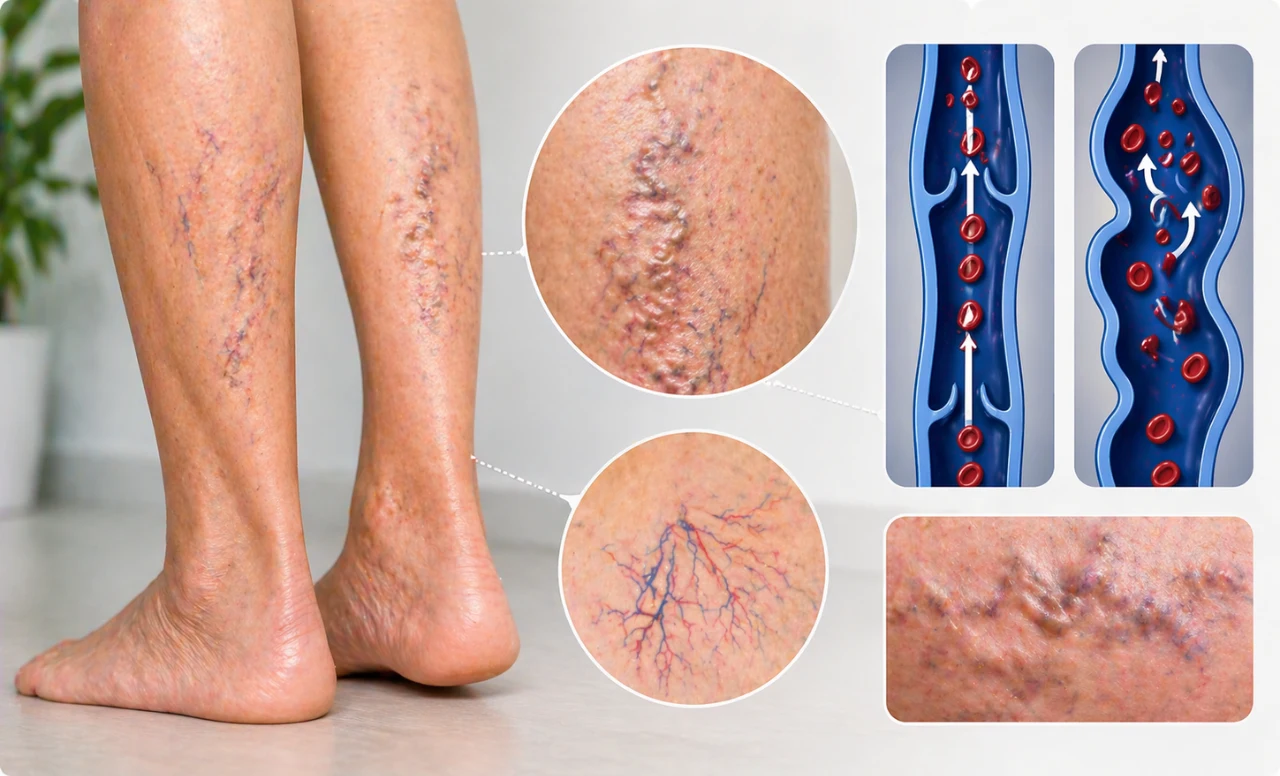
What Causes Varicose Veins?

Varicose veins develop when the valves inside leg veins do not close properly. This causes blood to pool in the veins, increasing pressure and stretching the vessel walls.
Common contributing factors include:
- Family history of vein disease
- Prolonged standing or sitting
- Pregnancy
- Increasing age
- Obesity
- Hormonal changes
- Low physical activity
Over time, untreated vein pressure may lead to visible veins, swelling, discomfort, or skin changes.
Symptoms of Varicose Veins
Symptoms may vary from mild discomfort to persistent daily irritation.
Common symptoms include:
- Heavy or tired legs
- Aching after standing for long periods
- Burning or throbbing sensation
- Swelling around ankles
- Itching near veins
- Night cramps
- Restless feeling in the legs, especially at night
Visible bulging veins may be present, but symptoms can occur even before veins become prominent.
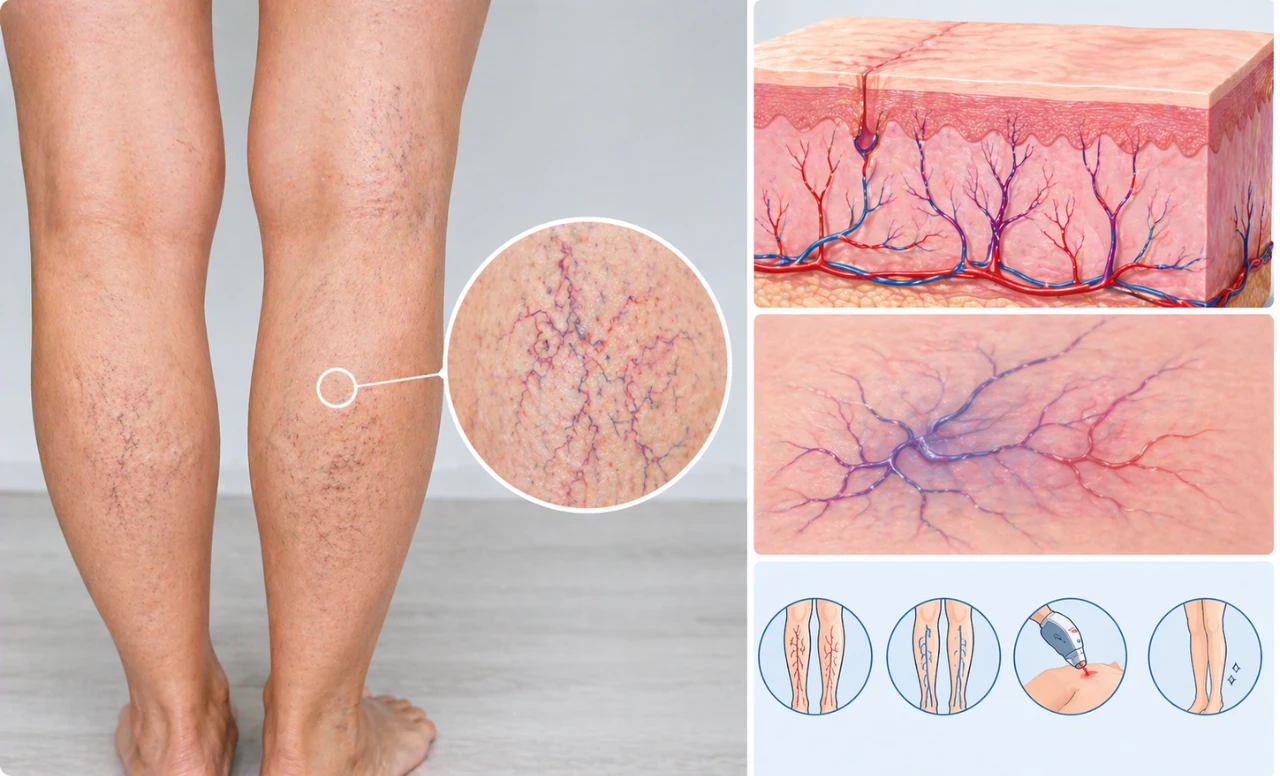
Spider Veins on Legs: How They Differ
Spider veins on legs are smaller, fine red, blue, or purple surface veins. They are different from larger varicose veins but may occur together.
- Usually closer to the skin surface
- Common on thighs, calves, or ankles
- Often cosmetic, but may indicate underlying venous weakness
- Can be treated when bothersome or progressive
Treatment options may include spider vein therapy depending on severity and appearance.
How Varicose Veins Are Diagnosed
Diagnosis usually includes clinical examination and a venous Doppler ultrasound.
This helps assess:
- Valve leakage (venous reflux)
- Blood flow pattern
- Deep vein health
- Severity of vein disease
- Best treatment approach
Proper diagnosis is essential before any laser treatment for varicose veins or injection-based therapy
When Varicose Veins Need Treatment
Not every visible vein needs a procedure. Treatment is considered when symptoms, progression, or complications are present.
Medical Varicose Veins Treatment may be advised when there is:
- Persistent pain or heaviness
- Swelling in the legs
- Skin darkening or itching
- Recurrent inflammation
- Bleeding from veins
- Non-healing ulcers
- Cosmetic concern affecting confidence
Early treatment often gives better results and prevents progression.
Varicose Veins Treatment Options
Treatment depends on symptoms, vein size, ultrasound findings, and patient goals.
1. Conservative Management
Mild cases may improve with:
- Compression stockings
- Leg elevation
- Walking and exercise
- Weight management
- Avoiding prolonged standing
2. Laser Treatment for Varicose Veins
Laser treatment for varicose veins uses heat energy to close the affected vein from inside.
Benefits may include:
- Minimally invasive treatment
- Small puncture, no major cuts
- Faster recovery
- Good cosmetic outcome in suitable cases
3. Sclerotherapy Treatment
Sclerotherapy treatment involves injecting a solution into small or medium veins, causing them to close and fade over time.
It is commonly used for:
- Smaller varicose veins
- Reticular veins
- Spider veins on legs
4. Advanced Procedures
Depending on the case, other minimally invasive vein procedures may be recommended by a varicose veins surgeon.
Recovery After Vein Treatment
Recovery depends on the procedure performed and severity of disease.
Many patients can expect:
- Early walking after treatment
- Return to routine activity in a few days
- Compression stockings for a period
- Follow-up review if needed
- Gradual improvement in symptoms and appearance
Following post-treatment advice improves long-term outcomes.
Risks of Ignoring Varicose Veins
If symptoms progress and treatment is delayed, complications may include:
- Persistent swelling
- Skin pigmentation
- Eczema or itching
- Vein inflammation
- Bleeding from surface veins
- Venous ulcers near the ankle
Timely Varicose Veins Treatment helps reduce these risks.
How to Reduce the Risk of Varicose Veins
Helpful preventive measures include:
- Staying active
- Maintaining healthy weight
- Avoiding long standing periods
- Elevating legs when resting
- Using compression stockings when advised
- Managing symptoms early
Consult a Varicose Veins Surgeon
Consult a varicose veins surgeon or vascular specialist if you have:
- Leg heaviness or pain
- Swelling around ankles
- Visible bulging veins
- Skin discoloration
- Bleeding veins
- Recurrent symptoms despite stockings
Early consultation helps identify the right treatment option.
Frequently asked questions
Varicose veins are enlarged, twisted veins caused by weak valves, usually seen in the legs. Spider veins are smaller red, blue, or purple surface veins that are usually cosmetic but may indicate vein weakness.
The main cause of varicose veins is faulty vein valves that allow blood to flow backward and pool inside the veins. This increases pressure and causes veins to enlarge over time.
Varicose veins are not always serious, but untreated cases may lead to pain, swelling, skin discoloration, bleeding, inflammation, or ulcers. Persistent symptoms should be medically evaluated.
The best treatment depends on vein size, symptoms, and ultrasound findings. Options may include compression stockings, laser treatment for varicose veins, sclerotherapy treatment, or other minimally invasive vein procedures.
Varicose veins usually do not disappear completely on their own. Mild symptoms may improve with exercise and compression stockings, while medical procedures may be needed to close or remove damaged veins.
Major risk factors include family history, pregnancy, prolonged standing, obesity, increasing age, hormonal changes, and low physical activity. These factors increase pressure in leg veins and weaken vein valves.
Yes, walking helps improve calf muscle circulation and supports blood flow back toward the heart. Regular walking may reduce heaviness, swelling, and discomfort related to varicose veins.
Mild cases may be observed, but symptomatic or worsening veins should not be ignored. Untreated varicose veins can progress and may lead to swelling, skin damage, bleeding, or ulcers.
Yes, superficial varicose veins can occasionally bleed if injured or if the skin becomes thin. Medical treatment helps reduce the risk of future bleeding episodes.
Stay active, maintain healthy weight, avoid prolonged standing, elevate legs when resting, and use compression stockings if advised. Early treatment also helps prevent progression.
Varicose veins usually do not go away naturally. Symptoms may improve with lifestyle changes, but damaged veins often remain unless treated with medical procedures.
Common symptoms include heaviness, aching, swelling, itching, cramps, or visible bulging veins. See a doctor if symptoms persist, worsen, bleed, or are associated with skin changes.
Yes, sclerotherapy is effective for selected smaller varicose veins, reticular veins, and spider veins. It works by closing the treated vein so it gradually fades over time.
Modern treatments may include endovenous laser therapy, radiofrequency ablation, foam sclerotherapy, glue closure systems, and ultrasound-guided procedures depending on vein condition and suitability.
Yes, sclerotherapy for spider veins is widely used and generally safe when performed by trained specialists. It is effective in reducing visible surface veins over multiple sessions if needed.
Successful Treatments